Definition
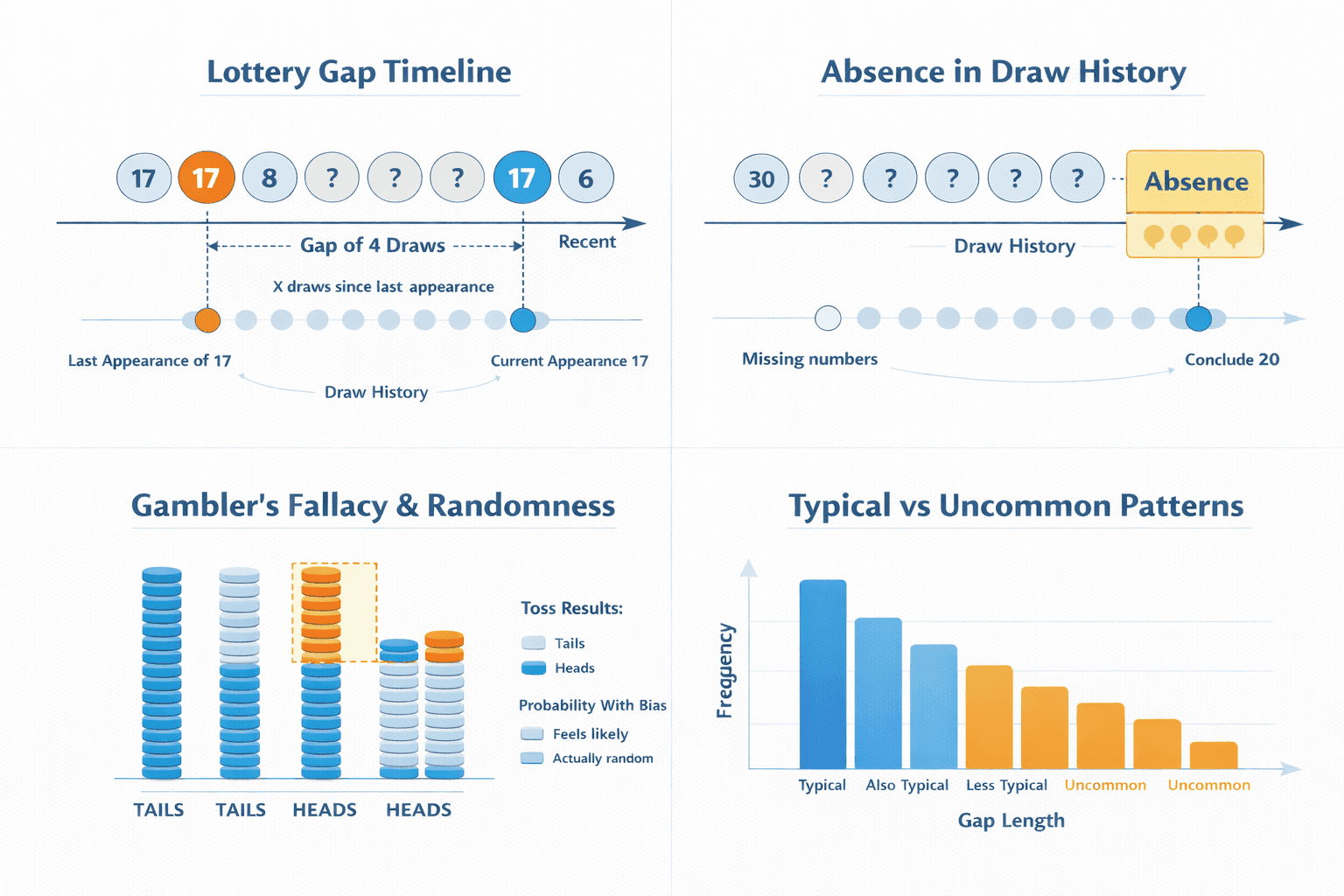
A lottery gap is the number of draws since a specific number last appeared in a lottery's historical results.
In simple terms, a gap tells you how long a number has been absent, not what will happen next.
Real Example: What a Gap Looks Like in Actual Data
The easiest way to understand a gap is to connect it to a real game and a real history of draws.
- A number may appear in one draw and then disappear for many draws.
- Each missed draw increases that number's current gap.
- Some numbers will have short gaps, while others will sit out much longer in the same dataset.
That longer absence is still a historical description, not a signal that the next draw owes a correction.
How gaps are calculated
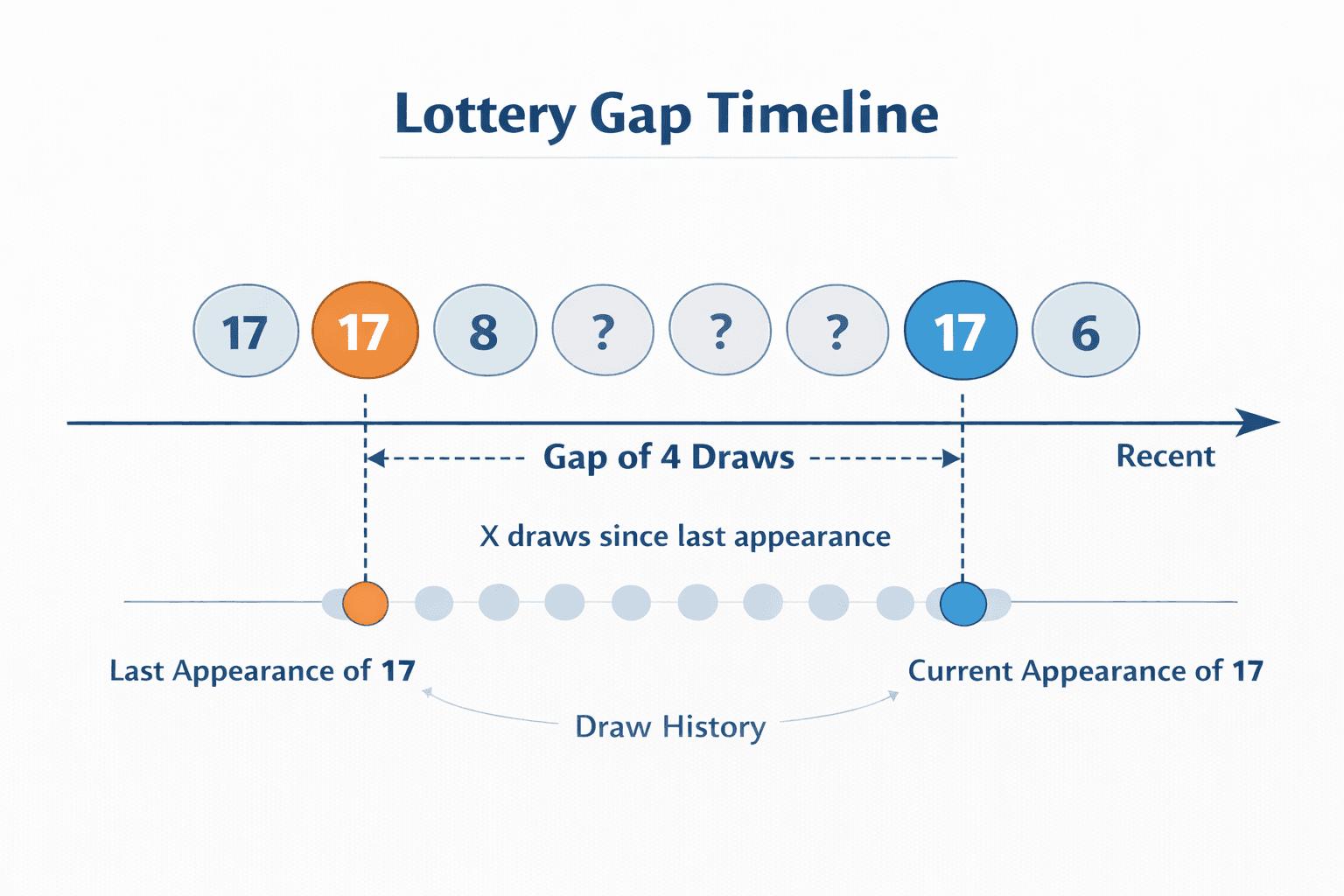
A gap is computed from the ordered draw history:
- Choose a number.
- Find the most recent draw where that number appeared.
- Count how many draws have happened since then.
If the most recent appearance of 17 was 5 draws ago, then the gap for 17 is 5.
What gaps actually measure
Gaps measure only historical absence. They do not measure probability, momentum, or likelihood.
Gap analysis is descriptive. It summarizes what happened in the dataset, not what will happen next.
Can lottery gaps predict future draws?
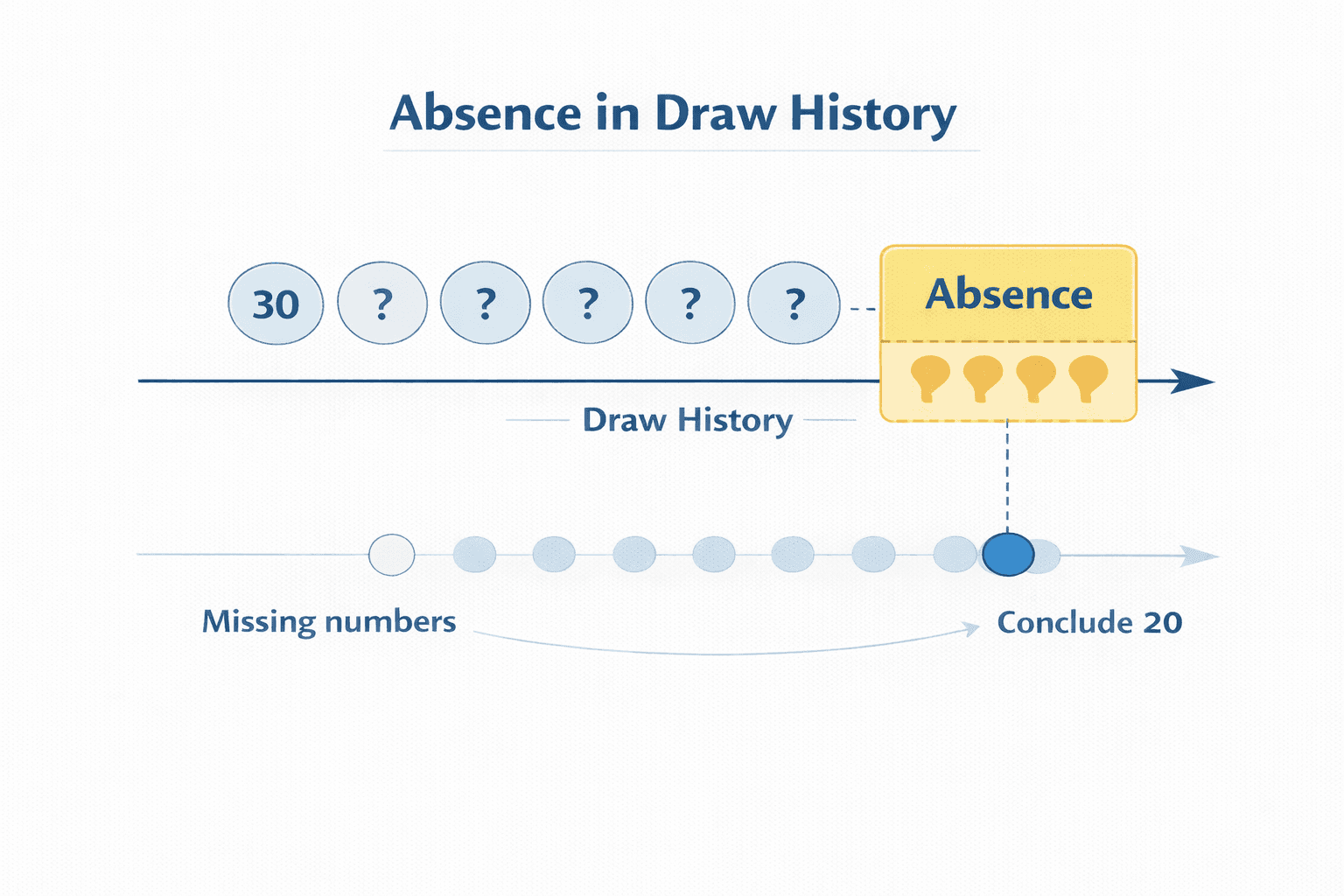
No. A lottery gap does not predict future outcomes.
Each draw is independent, so past absence does not create a future obligation. A number that has not appeared for many draws is not more likely next just because its current gap is long.
Lottery gap analysis can describe overdue-style history, absence streaks, and spacing patterns. It cannot predict future winning numbers.
The most common misconception
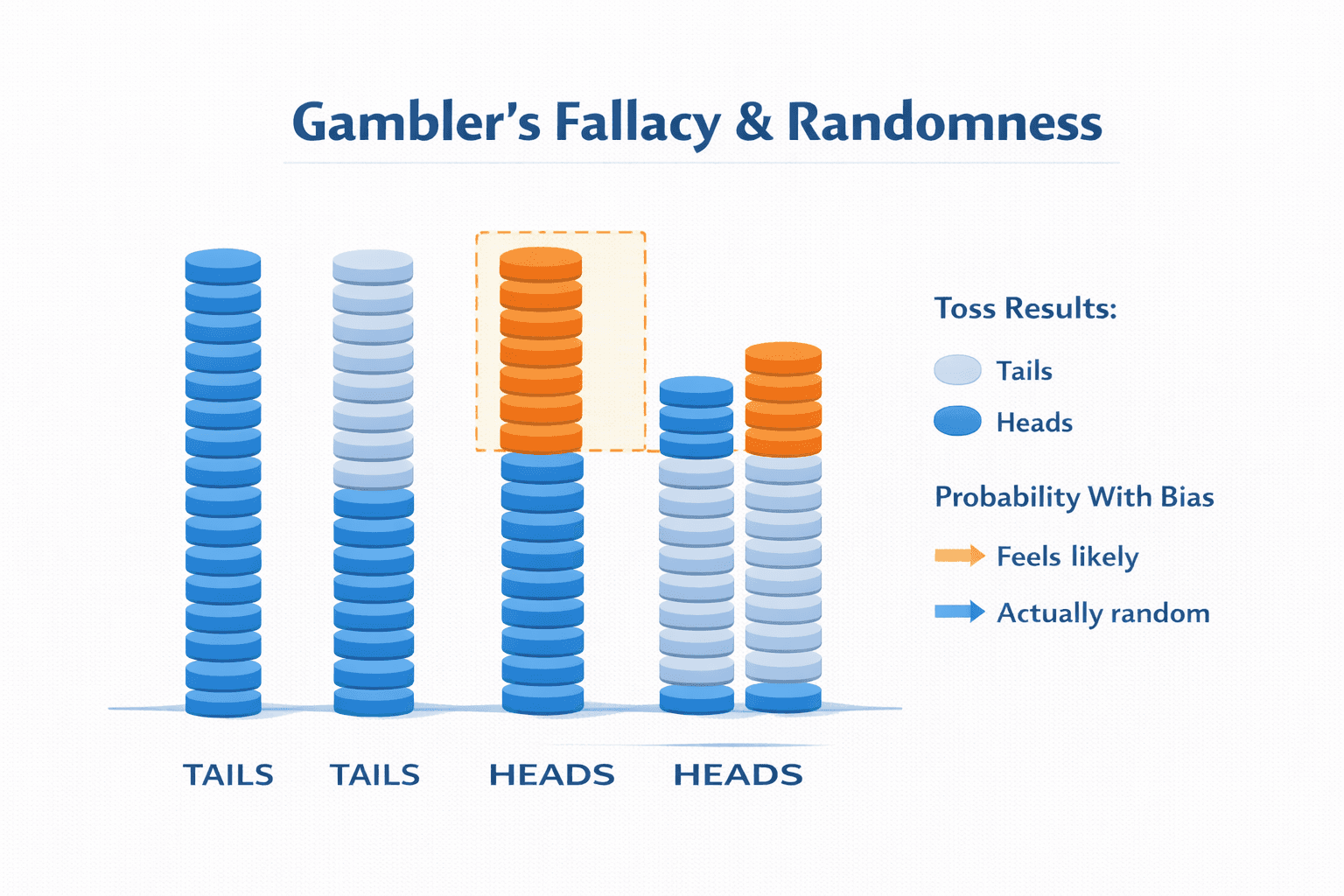
A common belief is that a number with a long gap is due.
This is a classic reasoning error often called the Gambler's Fallacy.
In independent random processes, past absence does not create a future obligation. A long gap can happen naturally without implying a future correction.
Why humans misread gaps
People are good at spotting patterns, but that can lead to over-interpreting randomness.
- Absence feels meaningful, even when it is ordinary variation.
- We expect random systems to "balance out."
- We remember streaks and long gaps more than normal behavior.
Lottery gap analysis explained
Lottery gap analysis is often used to explore concepts such as overdue numbers, absence streaks, gap charts, and historical spacing between appearances.
These views help organize the past dataset. They do not turn a random process into a forecast.
How LottoLogicAI uses gaps
LottoLogicAI uses gap analysis only as a historical descriptor. The goal is to help users understand how absence patterns appear inside a selected historical scope.
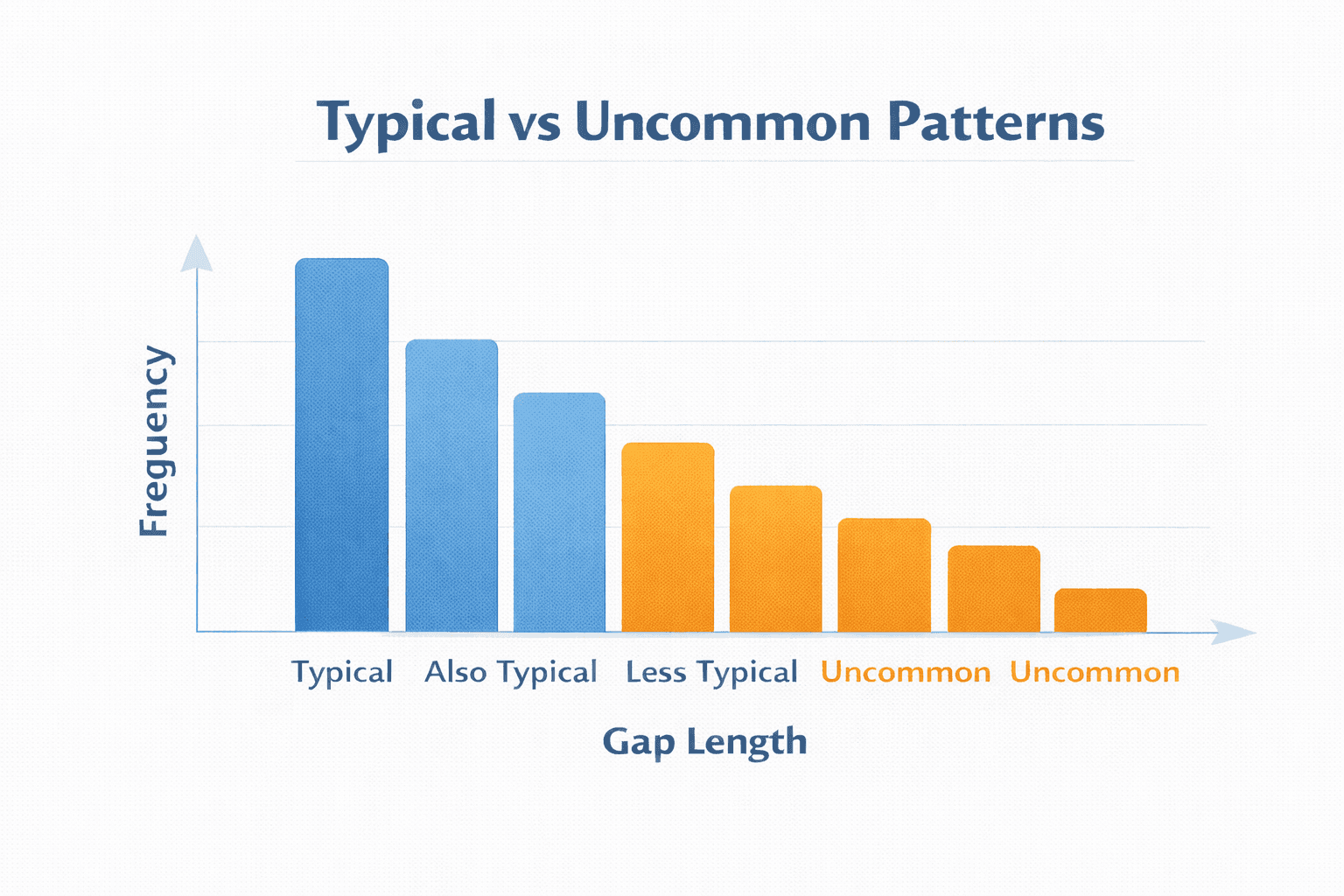
- Typical gap ranges observed in a dataset
- Longest historical gaps observed
- How recent and absent patterns vary inside a selected scope
Where to See This in LottoLogicAI
Gap-related history appears across LottoLogicAI's public stats and analysis surfaces. These pages help connect the concept of absence to real game data and a real historical record.
You can explore real gap patterns across games using LottoLogicAI'shistorical analysis pages and public stats surfaces.
Browse public historical stats to see how descriptive data patterns look across a full dataset.
Open analyzer →Compare public historical stats pages across supported games.
Open analyzer →What gaps do not mean
- They do not mean a number is overdue.
- They do not mean a number is more likely next.
- They do not mean the system is balancing itself.
- They do not mean prediction is possible.
A gap means one thing only: this number has not appeared for X draws.
How gaps fit with broader analysis
Gap analysis is often viewed alongside other historical summaries such as frequency, recent results, and broader distribution patterns.
- Are certain numbers absent for longer than usual in this window?
- How do long gaps compare with overall historical frequency?
- Do recent results change how a number looks across different views?
This is descriptive context only. It is not a forecast.
Frequently asked questions about lottery gaps
Is a lottery gap real?
Yes. A lottery gap is a real historical measure. It simply tracks how many draws have passed since a number last appeared.
Do long lottery gaps mean a number is due?
No. A long gap means only that the number has been absent for many draws. It does not mean the next draw owes a correction.
Can lottery gap analysis predict winning numbers?
No. Lottery gap analysis is descriptive only. It summarizes the past dataset and does not predict future outcomes.
What is a typical lottery gap?
There is no single typical gap for every game. Gap lengths vary by lottery format, pool size, and the historical window being studied.
- Lottery FrequencySee how often numbers appeared in a historical window.
- Frequency vs GapCompare long-term appearance counts with recent absence.
- What "Overdue" Means in Lottery HistoryUnderstand why "overdue" is a historical label, not a forecast.
- Lottery Stats HubBrowse public historical stats pages across supported games.
- Mega Millions StatsExplore a public multi-pool stats page with main-number and Mega Ball frequency.
- Powerball StatsCompare another public multi-pool game page built from historical draw data.
- Florida Fantasy 5 StatsSee historical stats for a Pick-5 style lottery game.
Continue with Public Stats or Create an Account
Read more Learn guides, browse public lottery stats pages, or create an account to explore more historical analysis tools inside LottoLogicAI.