Real example: frequency in actual lottery data
The clearest way to understand frequency is to connect it to a real game and a real historical dataset.
- Some numbers will appear more often than others over a fixed window.
- Some will sit near the average, while others drift above or below it.
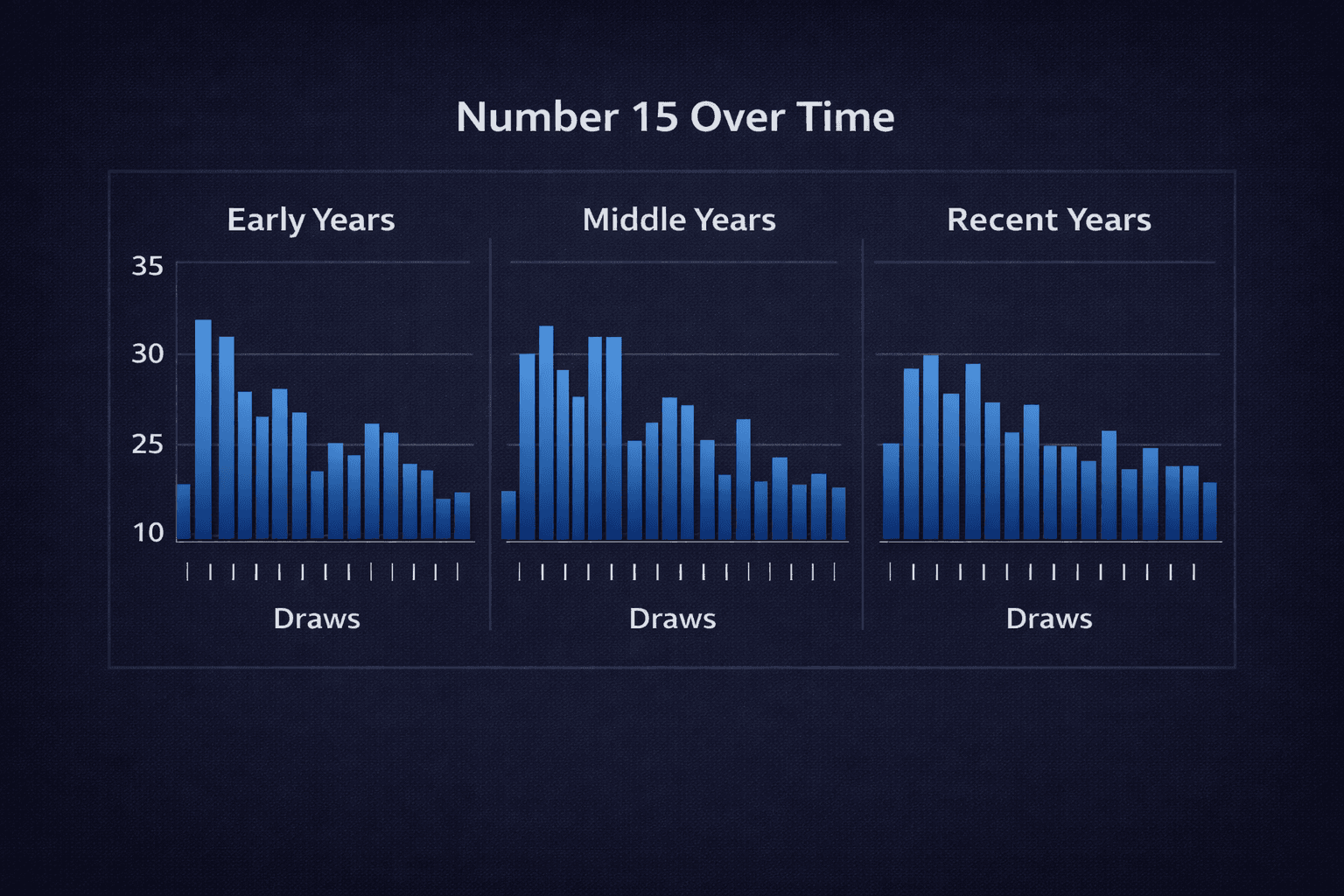
- That variation is expected in finite historical samples and does not mean the next draw is being shaped by prior counts.
In other words, frequency helps describe how the dataset behaved. It does not turn that behavior into a forward-looking signal.
What lottery frequency means
Lottery frequency is a simple historical count: how many times each number appeared in a selected set of past draws. If a number shows up 42 times in the window you chose, its frequency for that window is 42.
On a public page like Powerball statistics, frequency appears as a historical summary of past results rather than a prediction tool.
How frequency is calculated
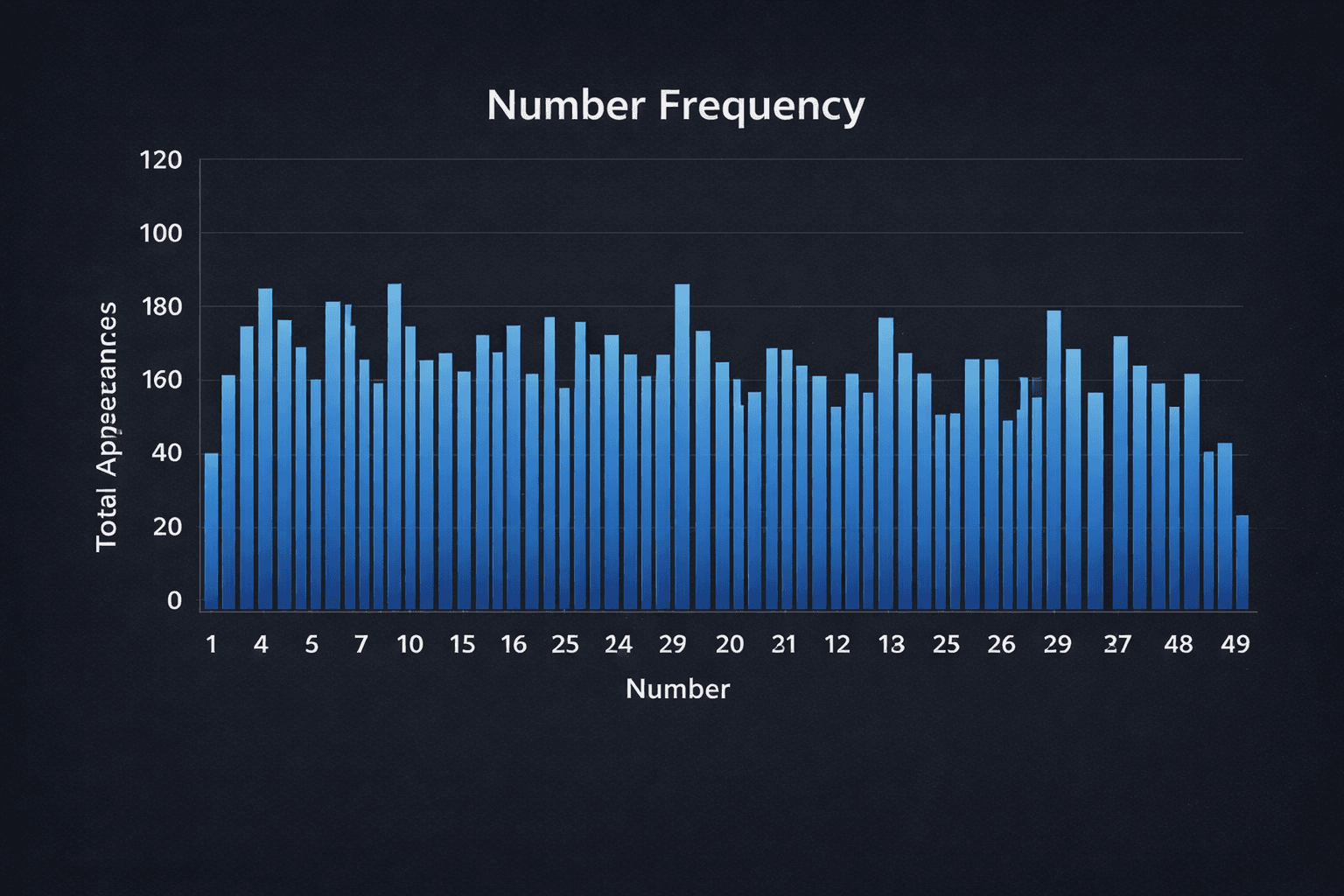
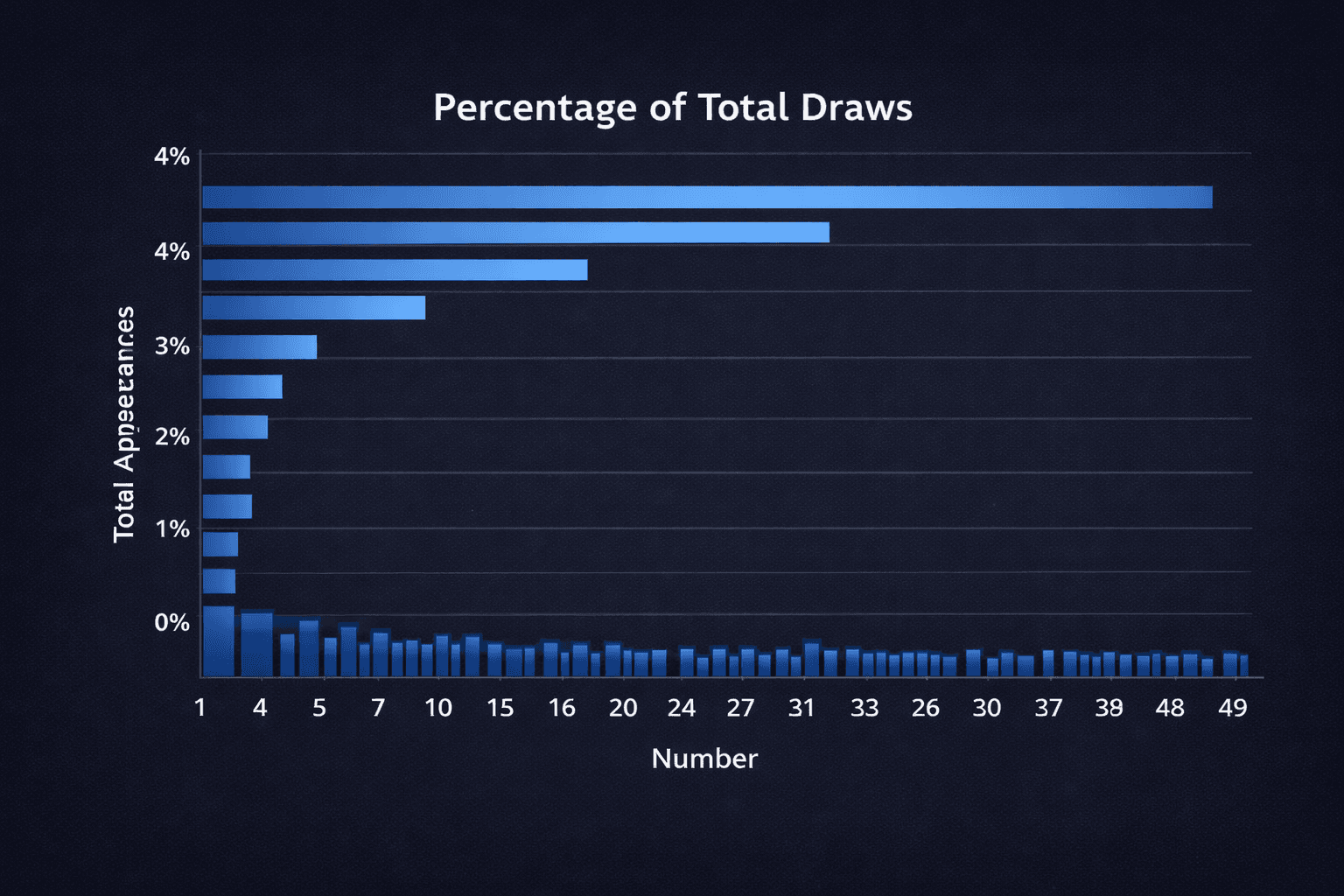
Frequency is calculated by scanning every draw and incrementing a counter each time a number appears. Some views also express the result as a share of total draws (a percentage), which makes comparisons easier across different window sizes.
Why uneven frequency is normal
In any finite sample, random processes produce uneven results. Some numbers will land above the average and some below it, even when the draw is fair. Frequency differences are not surprising — they are a normal feature of historical data.
“Hot” and “cold” numbers: what they mean
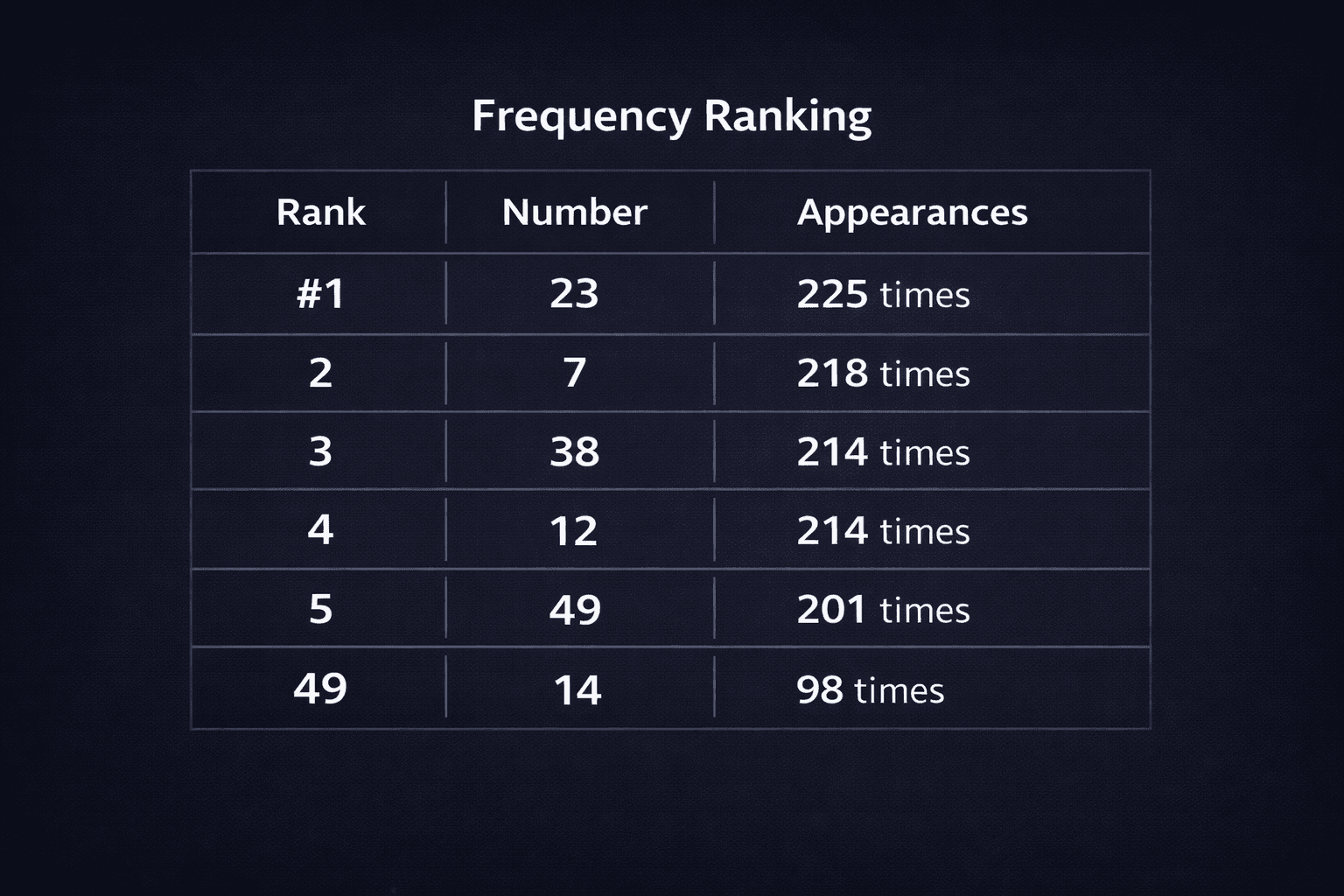
“Hot” and “cold” are informal labels applied to frequency rankings: numbers that appeared more often (hot) or less often (cold) in the chosen window. Change the window, and the ranking changes too.
What frequency does not mean
Frequency does not predict future draws. Past appearance counts do not influence what happens next, and they do not imply any number is “due,” “likely,” or “better.” Each draw is a fresh event; the historical tally does not carry forward as an advantage.
How to use frequency correctly
- Use frequency to summarize and visualize historical distributions.
- Compare different windows to see how rankings shift over time.
- Treat “hot/cold” as descriptive labels, not recommendations.
- Avoid “due” thinking — gaps and runs happen naturally in random sequences.
For a real example, visit the Powerball statistics page to see how LottoLogicAI presents frequency as historical context only.
Where to see this in LottoLogicAI
Frequency appears across LottoLogicAI's public stats and analysis surfaces. These pages connect the concept to real historical records so users can see how descriptive counts behave in actual lottery datasets.
See recent Florida Fantasy 5 draw history and frequency statistics to connect frequency concepts to a real draw.
Open analyzer →Browse public historical stats to see how LottoLogicAI presents frequency as descriptive context.
Open analyzer →Frequently asked questions about lottery frequency
Do lottery numbers repeat?
Yes. Lottery numbers can repeat, and some numbers will appear more often than others in a finite historical window.
Does high lottery frequency mean a number is more likely next?
No. High historical frequency does not make a number more likely in the next draw. Frequency describes the past dataset only.
What do “hot” and “cold” lottery numbers mean?
“Hot” and “cold” are informal labels for numbers that appeared more or less often inside a selected historical window.
Why do some numbers appear more often in history?
Uneven frequency is normal in finite random samples. Some numbers will land above the average and some below it without implying prediction.
- Lottery GapSee how long it has been since a number last appeared.
- Frequency vs GapCompare long-term counts with short-term absence.
- Hot and Cold NumbersUnderstand how “hot/cold” labels come from historical windows.
- What “Overdue” Means in Lottery HistorySee how loaded “overdue” language differs from neutral counts.
- Powerball StatisticsSee a real public Powerball frequency page built from historical draw data.
- Lottery Stats HubBrowse public historical stats pages across supported games.
- Florida Fantasy 5 StatsSee another public stats page using historical draw data.
- California Fantasy 5 StatsCompare another real game page built from historical records.
View Real Stats and Learn How the Metrics Work
Continue with public lottery stats pages or create an account to explore more historical analysis tools inside LottoLogicAI.