What are hot and cold lottery numbers?
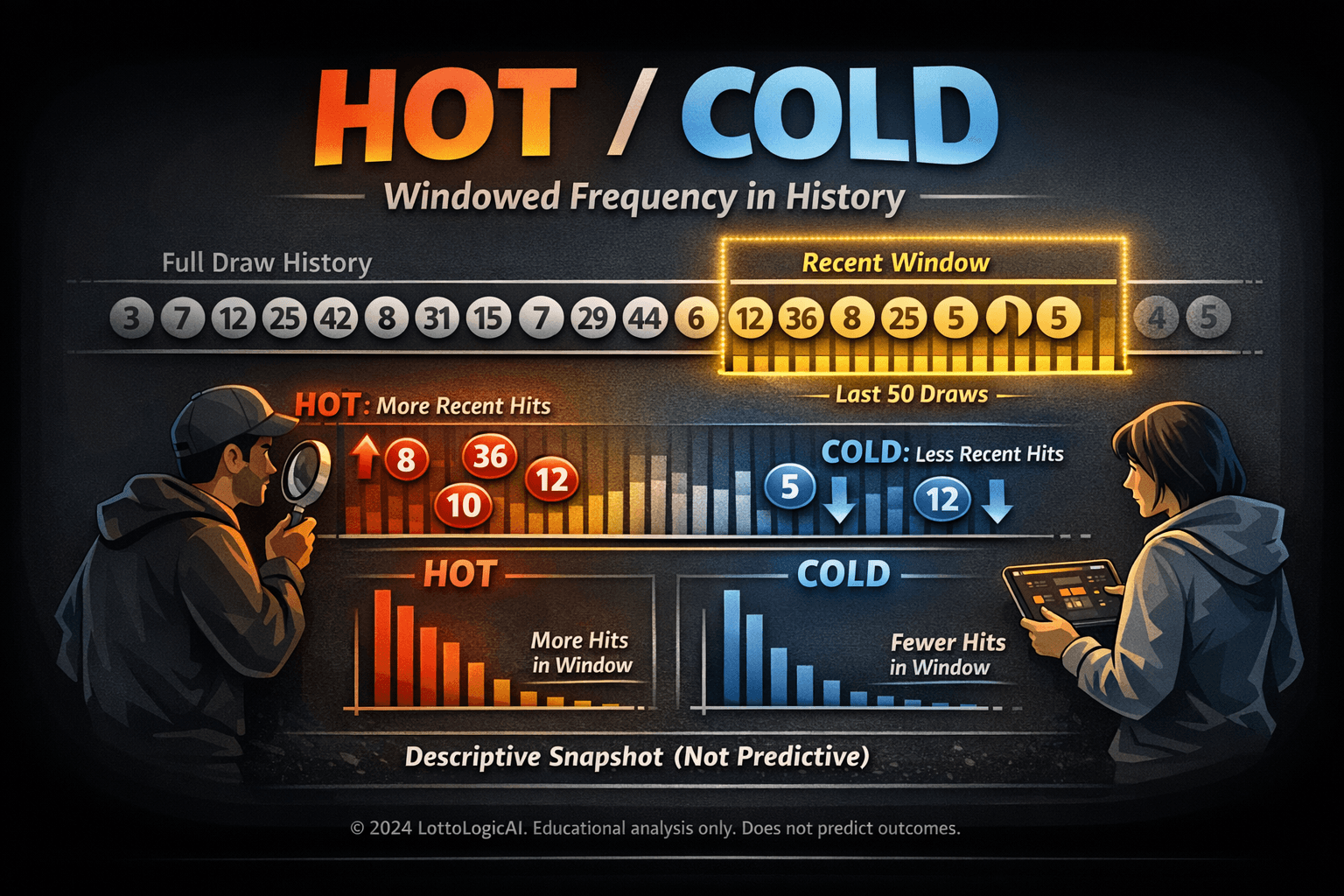
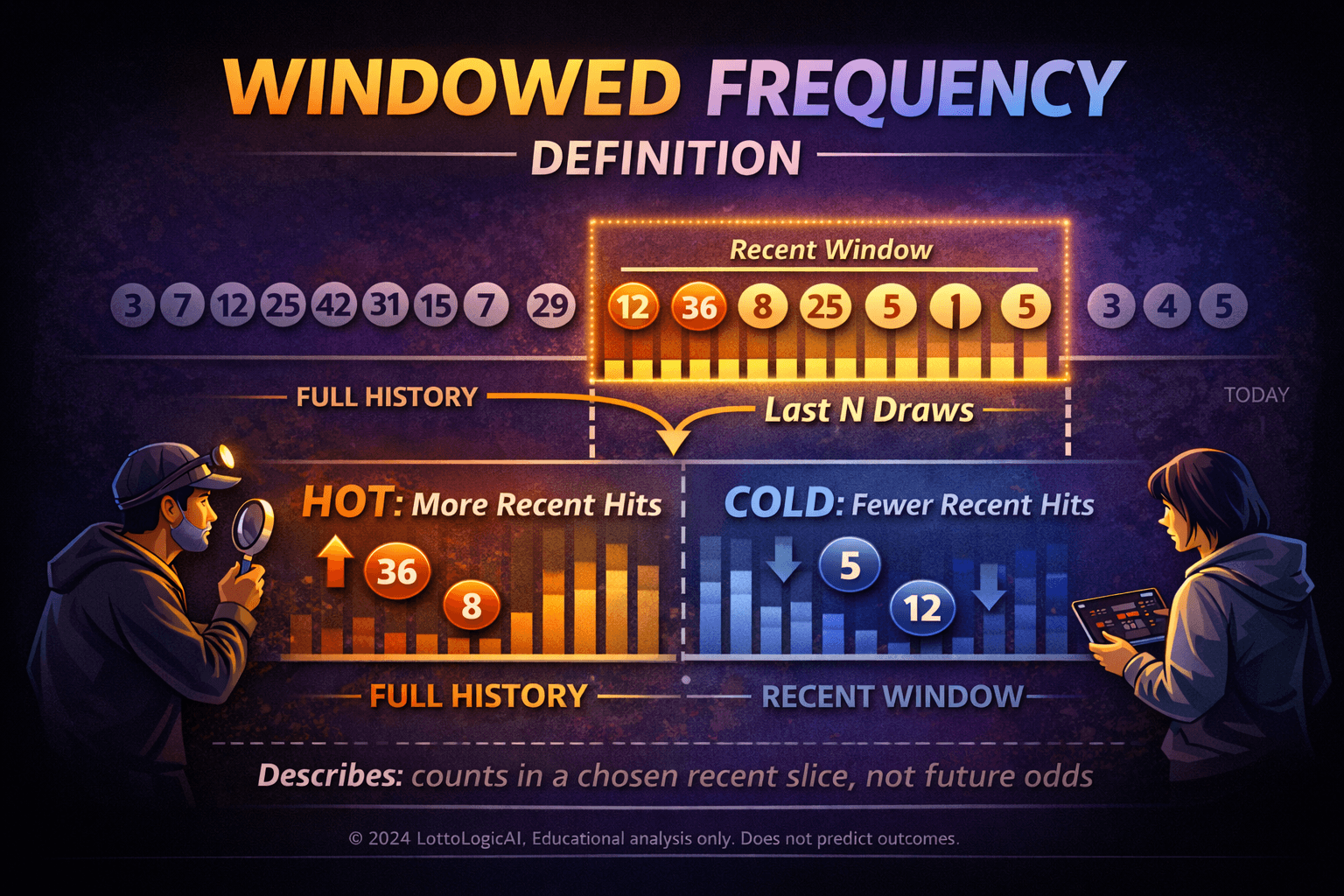
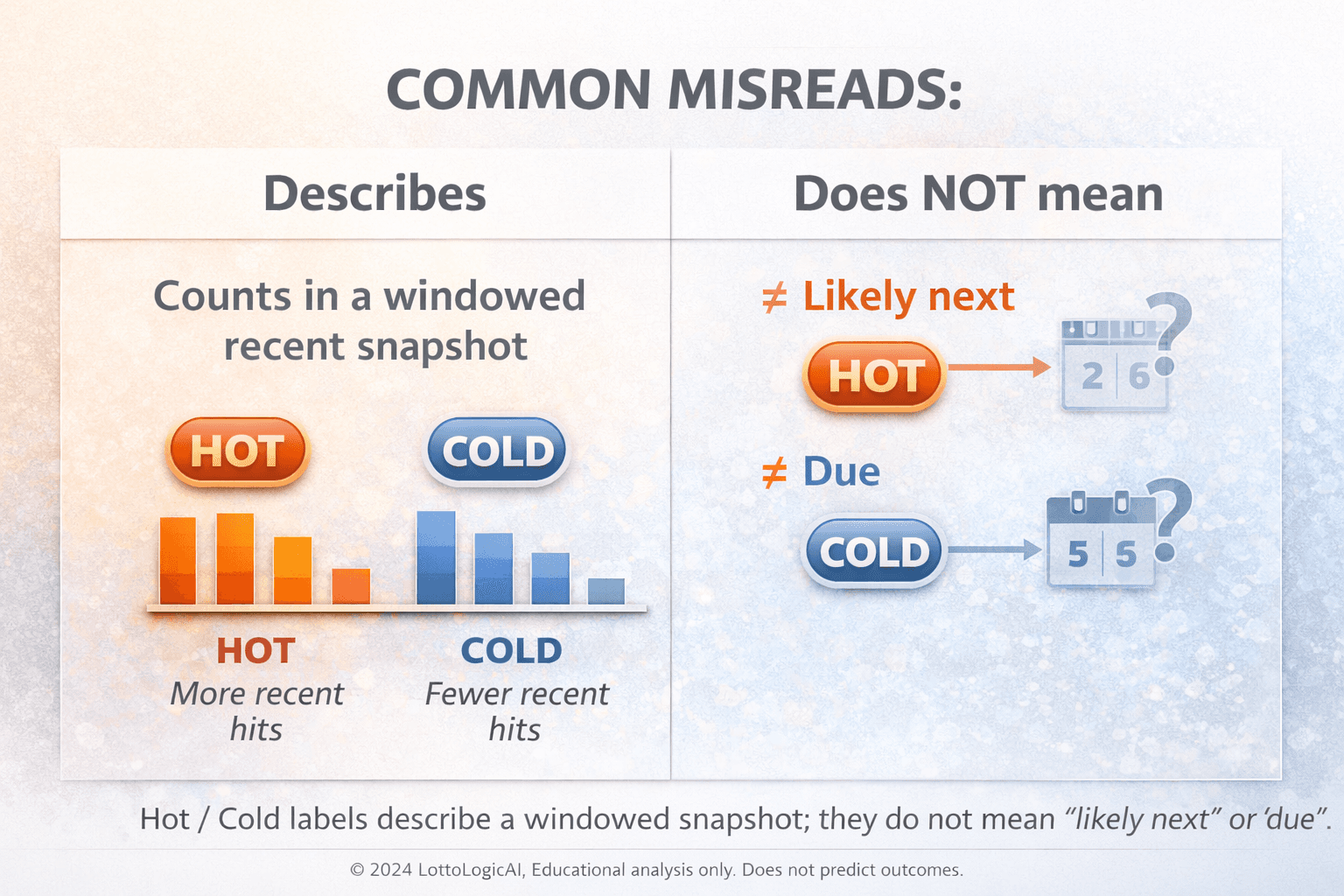
Hot and cold lottery numbers are labels created from a recent window of historical draws. A hot number appeared more often in that window. A cold number appeared less often. The label describes what happened in the selected slice of history only.
How hot and cold is calculated
Hot and cold is computed the same way as frequency, but using a limited recent window instead of full history:
- Choose a window size, such as the last 30, 50, or 100 draws.
- Filter to the selected scope.
- Count how many times each number appears within that window.
- Sort by count to produce a hotter-to-colder view for that window.
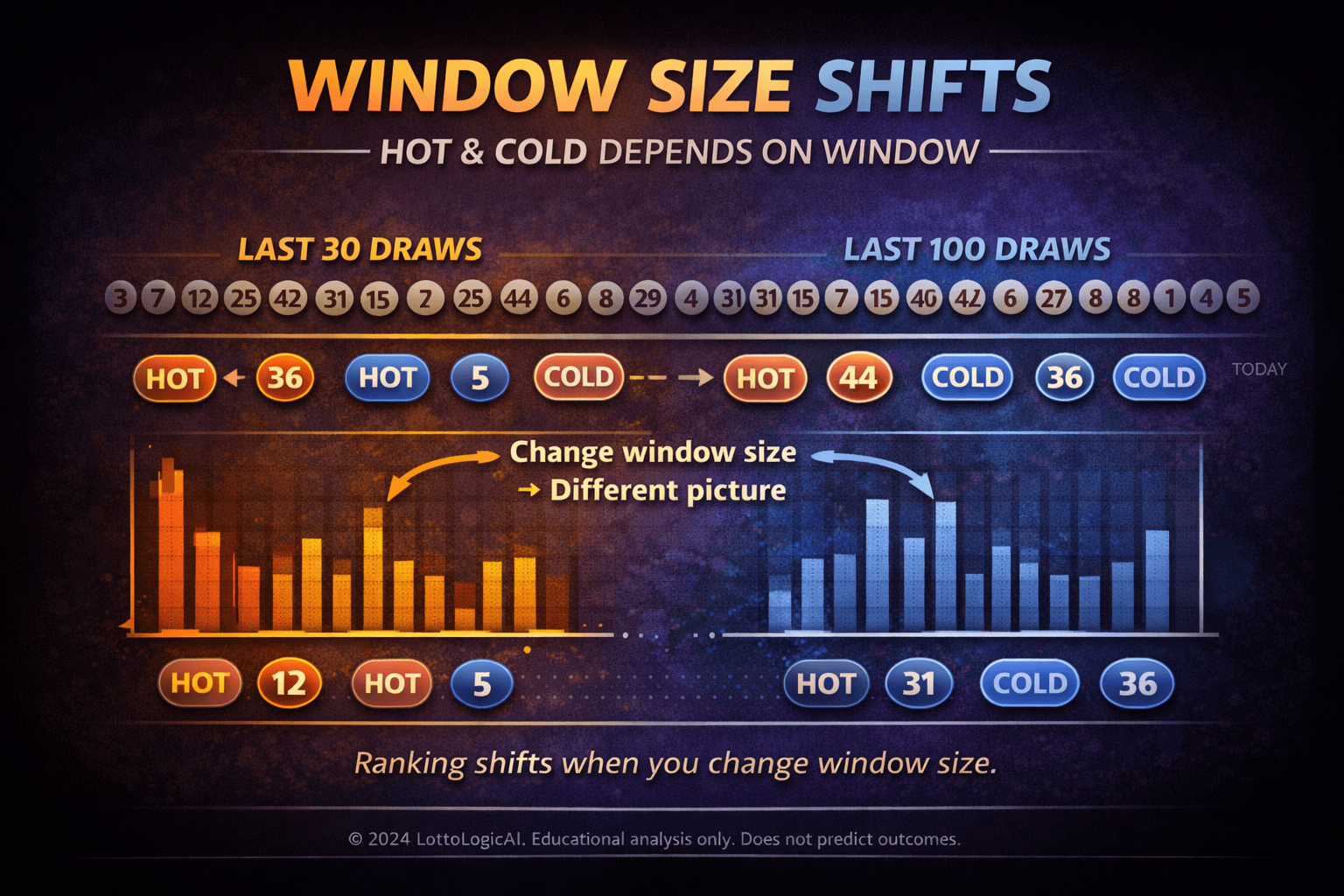
Changing the window changes the story. A number can look hot in the last 30 draws but typical in the last 200.
Do hot lottery numbers win more often?
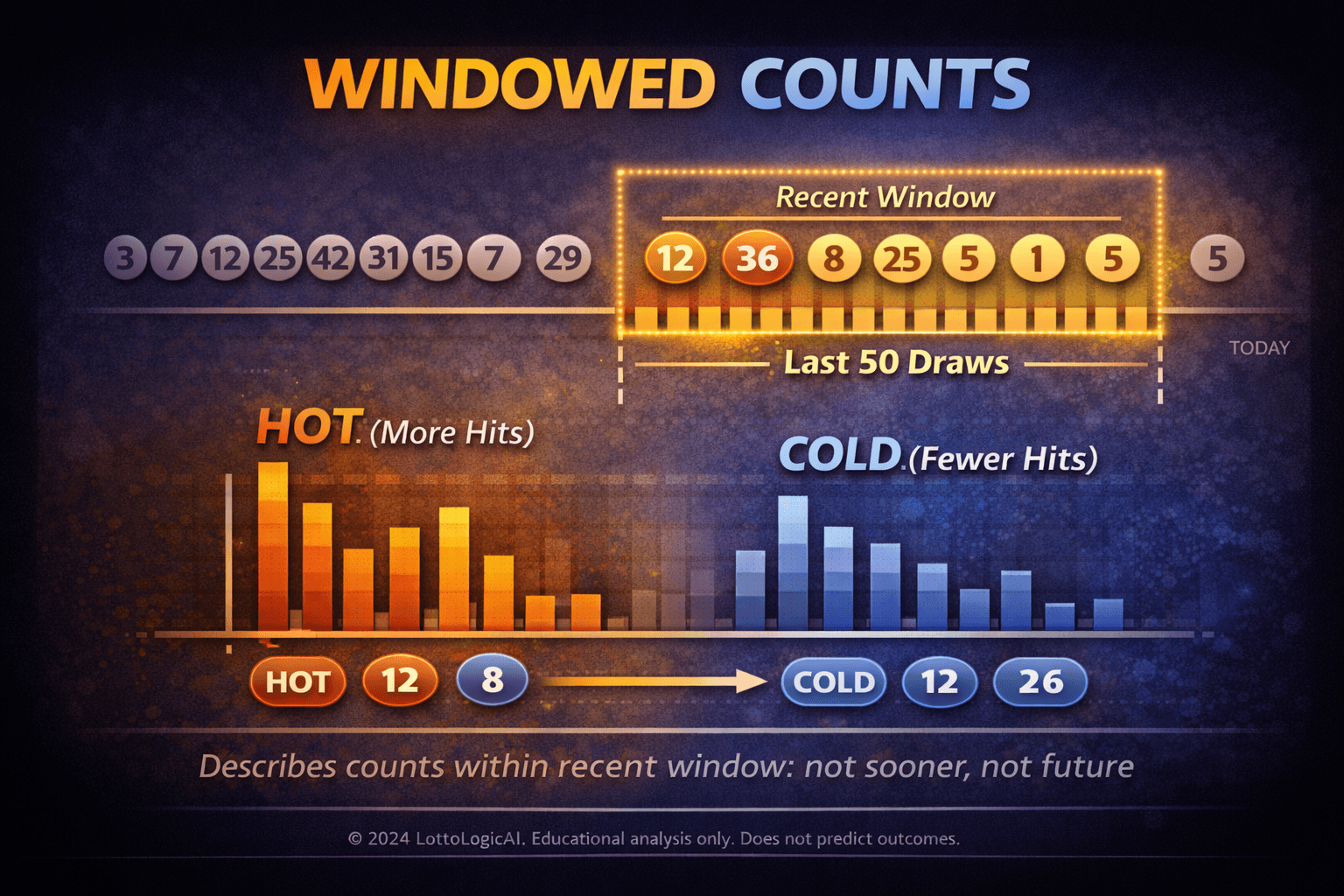
No. A hot label only means a number appeared more often in a chosen recent window of historical draws. It does not make that number more likely in the next draw.
- A hot label summarizes recent history inside a selected window.
- Short windows naturally produce uneven counts, even in random sequences.
- The label is descriptive, not predictive.
Are cold lottery numbers due?
No. A cold label means fewer appearances in the chosen recent window. Past absence does not create a future obligation.
- A cold label means fewer appearances in the selected window.
- Past absence does not create a future obligation.
- Cold is not a signal of an upcoming appearance. It is a historical snapshot.
Can hot and cold numbers predict the next draw?
No. Hot and cold lottery numbers summarize past frequency inside a selected window. They are descriptive only and do not predict future outcomes, identify winning numbers, or improve odds.
Hot and cold numbers can describe recent historical patterns. They cannot forecast the next result.
Example: Mega Millions hot and cold numbers
In Mega Millions, hot and cold numbers mean the same thing they mean anywhere else: numbers that appeared more or less often in a selected historical window. The label depends entirely on the scope and window you choose.
You can explore a real public game page here:
Use a real public stats page to connect hot/cold language to historical lottery data.
Open analyzer →How LottoLogicAI uses hot and cold
LottoLogicAI uses hot and cold as a windowed context lens to describe how recent history compares to broader history within a selected scope.
- Which numbers appeared most or least within the chosen recent window
- How the snapshot shifts when you change window size
- Whether a set contains numbers that were common or rare in the recent window, as a descriptive historical summary only
What hot and cold does not mean
- It does not predict the next draw.
- It does not improve odds or provide an advantage.
- It does not identify winning numbers.
- It does not mean the system is correcting or balancing.
Hot and cold means exactly one thing: in this recent window, these numbers appeared more or less often.
Where to see this in LottoLogicAI
Hot/cold-style history appears across LottoLogicAI's public stats surfaces. These pages help connect the concept to real historical data and real lottery records.
Browse a public stats page based on real historical draw data.
Open analyzer →Compare another Pick-5 style public stats page built from historical results.
Open analyzer →Frequently asked questions about hot and cold lottery numbers
Do hot lottery numbers win more often?
No. A hot label only means a number appeared more often in a chosen recent window of historical draws. It does not make that number more likely in the next draw.
Are cold lottery numbers due?
No. A cold label means fewer appearances in a selected recent window. It does not mean the next draw owes a correction.
Can hot and cold lottery numbers predict the next draw?
No. Hot and cold numbers summarize past frequency inside a window. They are descriptive only and do not predict future outcomes.
What do Mega Millions hot and cold numbers mean?
In Mega Millions, hot and cold numbers mean the same thing they mean anywhere else: numbers that appeared more or less often in a selected historical window. The label depends on the window you choose.
- Lottery FrequencyUnderstand full-history appearance counts before reading short-window snapshots.
- Lottery GapLearn how “draws since last appearance” differs from hot/cold labels.
- Frequency vs GapCompare long-term historical counts with recent absence patterns.
- Lottery Stats HubBrowse public historical stats pages across supported games.
- Mega Millions StatsSee a public stats page based on real historical draw data.
- California Fantasy 5 StatsSee a public stats page based on real historical draw data.
- Florida Fantasy 5 StatsCompare another Pick-5 style game using historical results.
Continue with Public Stats or Create an Account
Browse public lottery stats pages or create an account to explore more historical analysis tools inside LottoLogicAI.