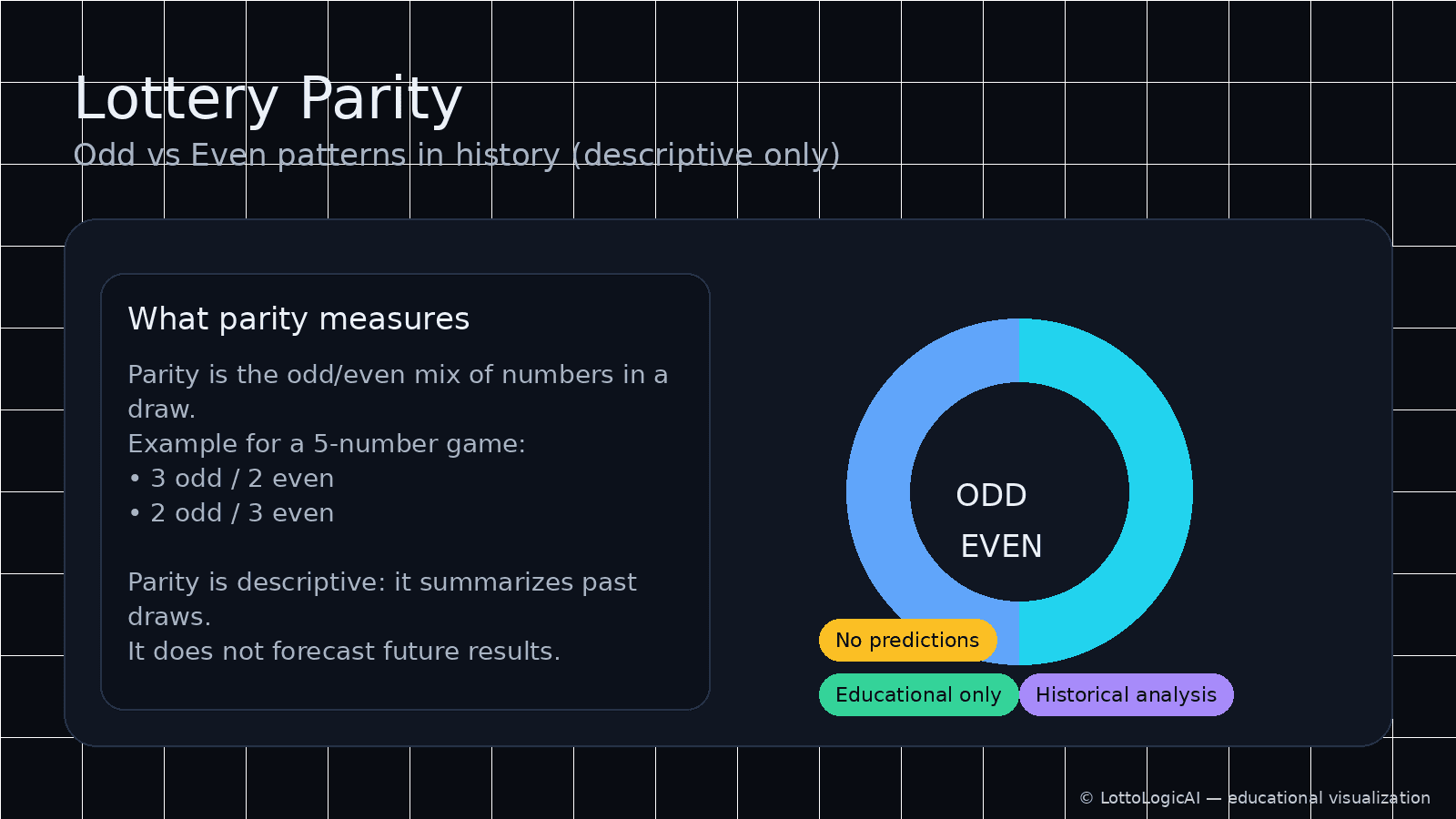
What is lottery parity?
Parity in lottery analysis refers to the odd/even split inside a single draw. For a 5-number game, every draw has a parity composition such as 3 odd + 2 even, 4 odd + 1 even, or 5 odd + 0 even.
Across a historical dataset, you can count how often each parity split occurred. This tells you something descriptive about past draw composition — it does not tell you what will happen next.
In a Pick-5 game with numbers 1–36, roughly half are odd and half are even. Over thousands of draws, middle splits like 3/2 and 2/3 will appear more often than extreme splits like 5/0 or 0/5 — simply because there are more combinations that produce a middle split. This is a combinatorial property of the game, not a pattern that predicts the next draw.
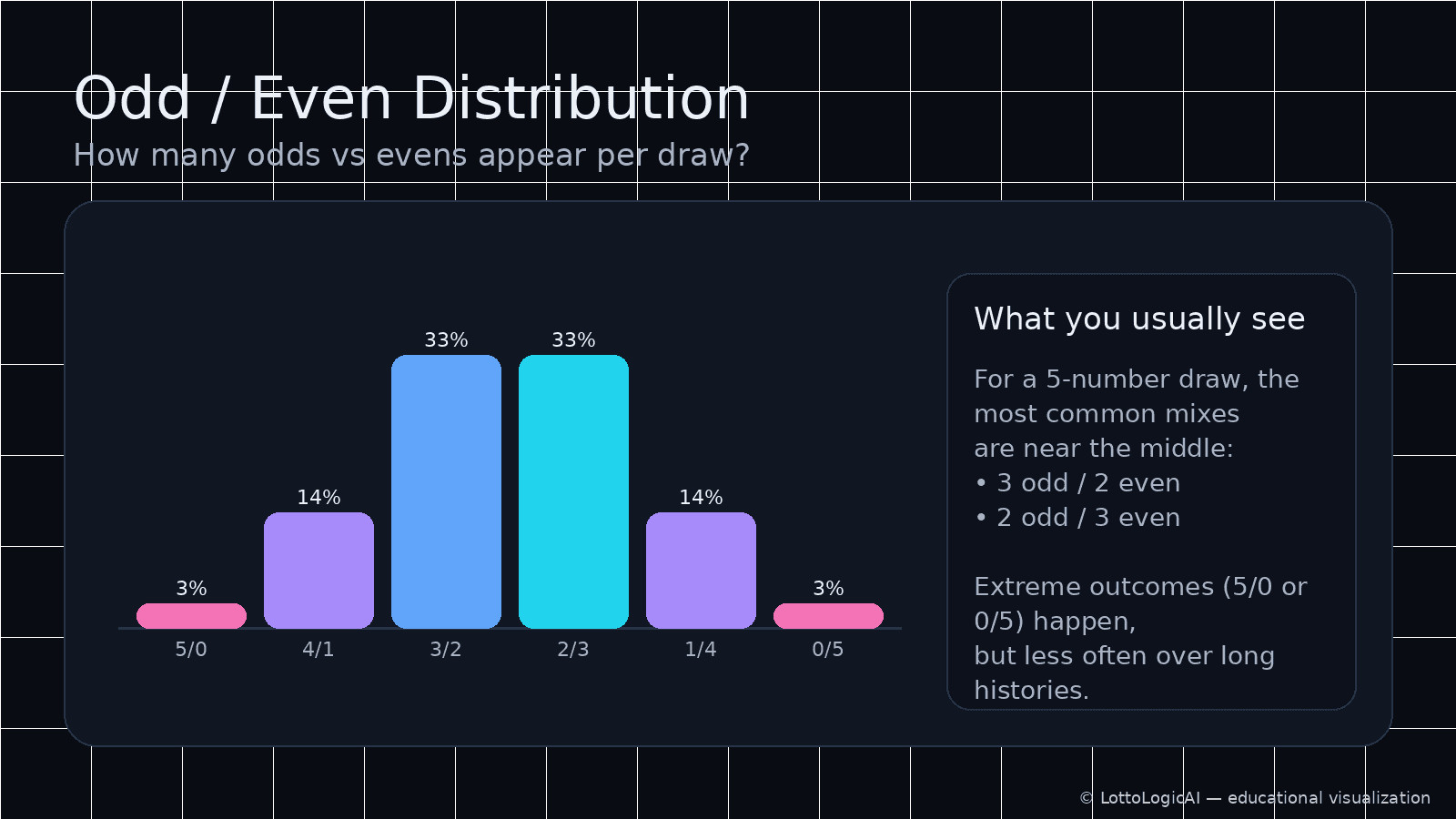
Odd / even distribution across draws
One of the most common parity questions is: how many odds versus evens happen per draw? In many 5-number games, the middle splits like 3/2 or 2/3 appear more frequently than extremes like 5/0 or 0/5. This is a descriptive property of historical draw composition, not a rule for what must happen next.
Historical balance over time
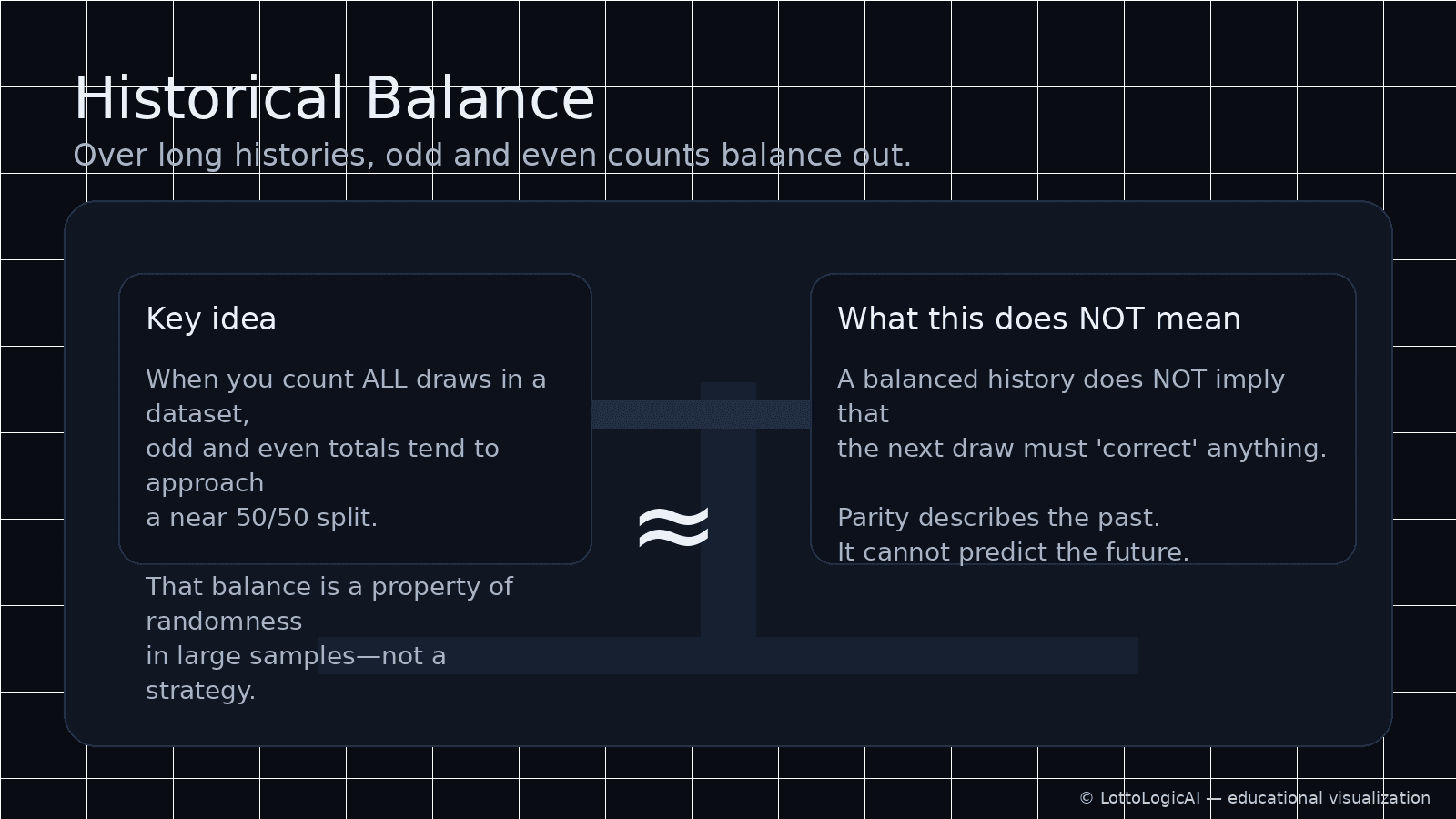
When you look across a long history of draws, the total count of odd numbers and even numbers often moves toward broad balance — sometimes close to a 50/50 split. This is a large-sample effect: as the dataset grows, many short-term skews become less dramatic.
Importantly, long-term balance does not create a future requirement for the next draw. Each draw is an independent event. Seeing a run of odd-heavy draws does not make even-heavy draws more likely next.
How window size affects parity readings
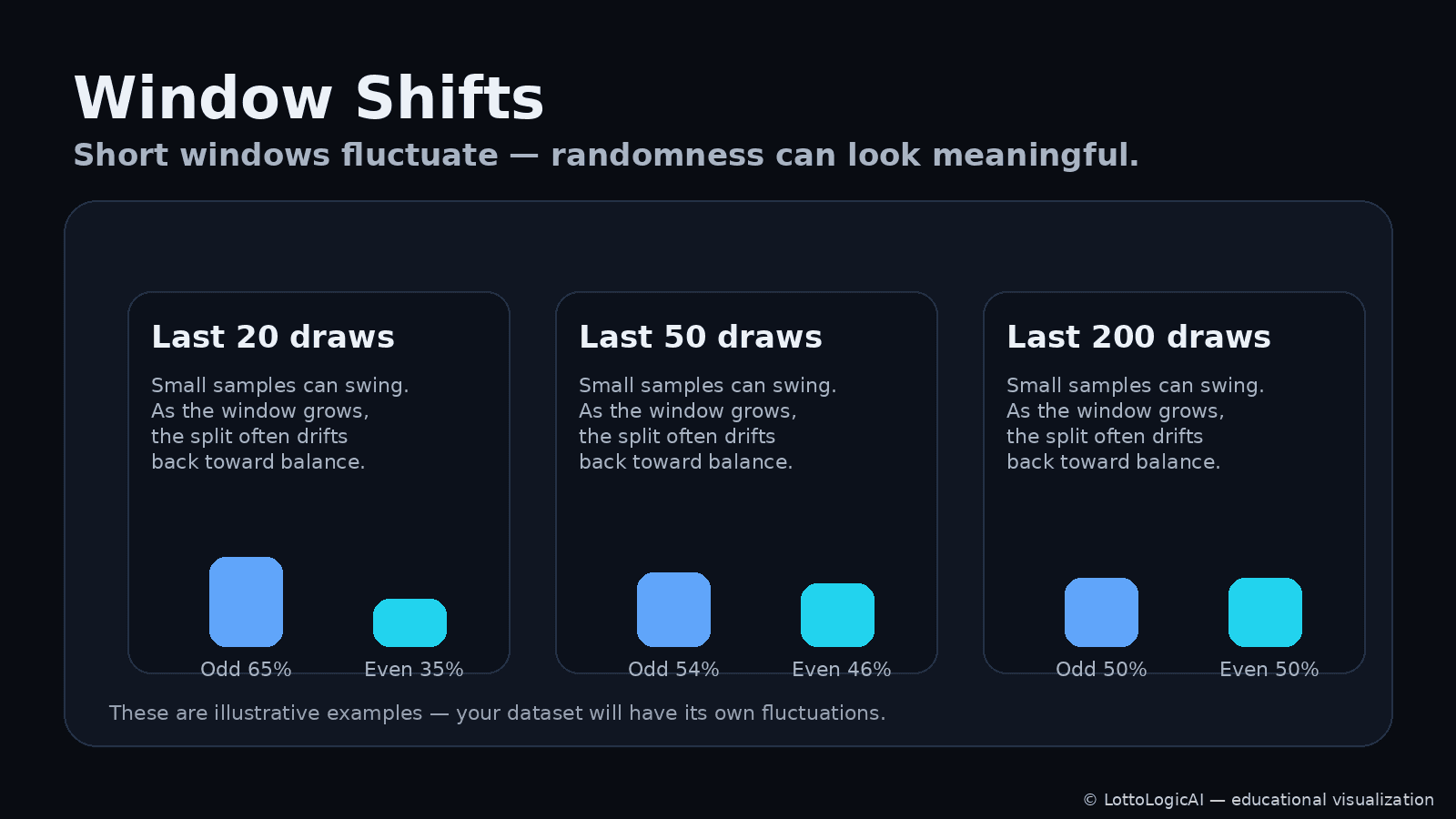
Parity can look dramatic when you zoom into short time windows, such as the last 20 or 50 draws. In small samples, the odd/even split can shift around simply due to randomness. As the window grows, those short-term fluctuations often look less extreme.
This is the same window-size effect that applies to hot and cold number labels: a short slice of history can feel meaningful, but it is often ordinary variation in a small sample.
Common parity myths
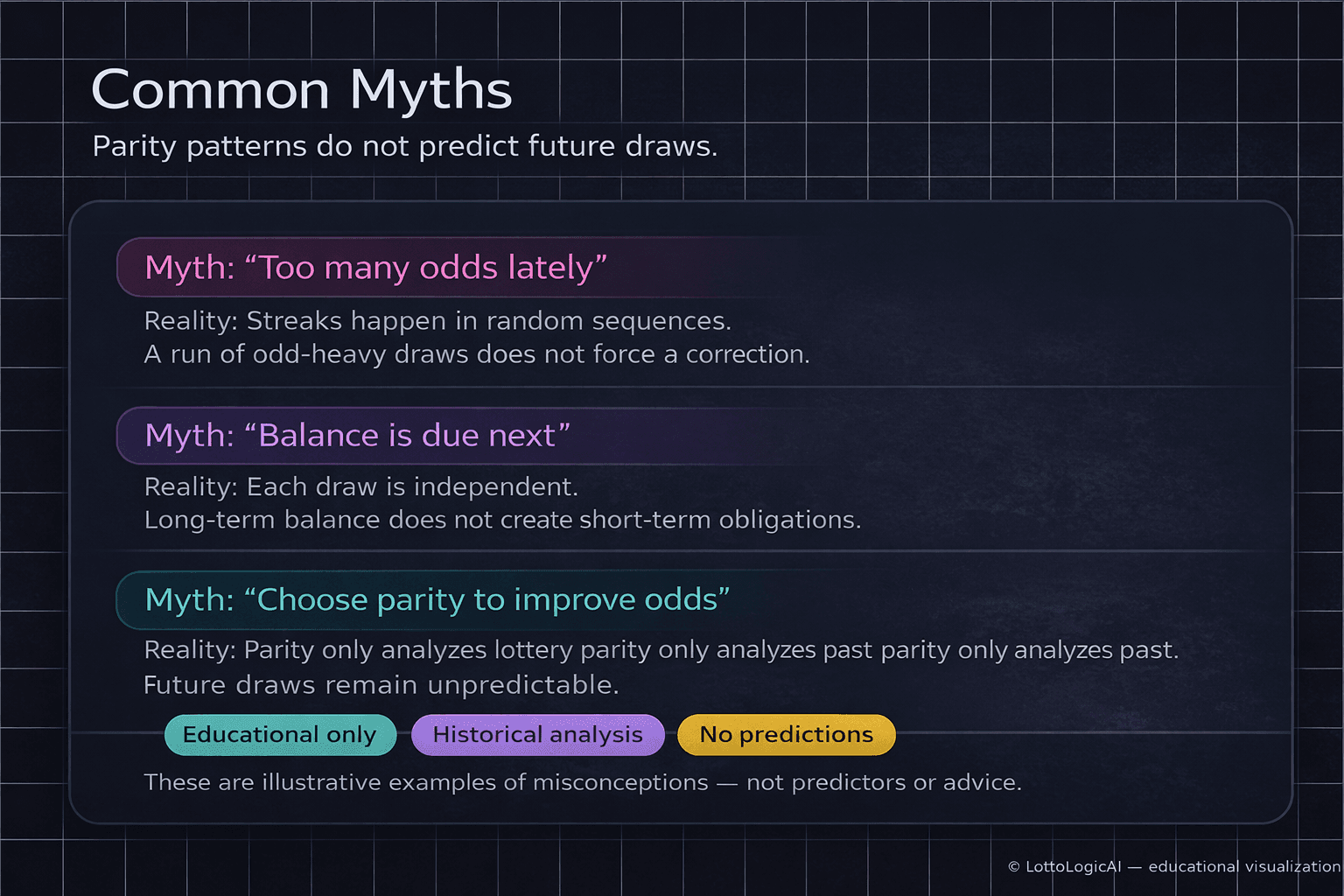
Parity is frequently misunderstood. A common fallacy is thinking: “there have been too many odds lately, so evens are due.” This is the same Gambler's Fallacy that applies to gap analysis and overdue numbers: lottery draws are independent events, so parity patterns in history do not create obligations for the next draw.
- Myth: Too many odds lately means evens are due.
- Reality: Each draw is independent. Past parity does not influence the next result.
- Myth: A balanced odd/even split is safer or more likely.
- Reality: Middle splits appear more often because more combinations produce them — not because the system favors balance.
Parity in Mega Millions and other multi-pool games
Games like Mega Millions and Powerball have two separate pools: a main number pool and a bonus ball pool. Parity can be measured separately for each pool or combined. In either case, the same principle applies: odd/even composition is a descriptive historical summary, not a signal about future draws.
If you're looking at Mega Millions hot and cold numbers or trying to understand the typical odd/even mix in Mega Millions history, parity gives you a structural view of past draws — it shows what combinations have appeared, sorted by odd/even split, without implying what comes next.
Open a real public stats page to connect parity concepts to live Mega Millions historical data.
Open analyzer →How parity relates to sum range
Parity and sum range are two structural views of the same draw. Parity describes the odd/even split; sum range describes the total value of the numbers drawn. Both are historical descriptors — neither predicts future results.
A draw with a high odd count will often (but not always) have a higher sum, since odd numbers tend to be larger in many pool configurations. But this is a mathematical property of the pool, not a signal you can act on.
How to read parity correctly
- Use parity to describe the composition of past draws.
- Compare short windows with longer history for context.
- Treat middle-heavy mixes as descriptive patterns, not signals.
- Avoid “due” logic based on recent odd/even imbalance.
Parity works best as one descriptive lens alongside other historical views such as frequency, sum, and time-window comparisons.
Where to see this in LottoLogicAI
Parity-related historical summaries appear across LottoLogicAI's public stats surfaces. These pages help connect the concept to real historical data and real lottery records.
Browse a public stats page based on real historical draw data.
Open analyzer →Compare another Pick-5 style public stats page built from historical results.
Open analyzer →Frequently asked questions about lottery parity
What is lottery parity?
Lottery parity describes the mix of odd and even numbers inside a draw. It is a historical summary of draw composition only and does not predict future outcomes.
Do odd and even lottery numbers balance out over time?
In large historical samples, odd and even totals often approach balance. But this long-run tendency does not create an obligation for the next draw. Each draw is independent.
Is a 3/2 odd/even split more common in lottery history?
In many Pick-5 games, middle splits like 3/2 or 2/3 appear more often than extremes like 5/0 or 0/5. This is a descriptive property of historical draw composition, not a rule for future draws.
Can parity predict the next lottery draw?
No. Parity analysis is descriptive only. It summarizes the past dataset and does not predict future results.
Does Mega Millions have a hot/cold odd/even pattern?
Mega Millions draws can be summarized by their odd/even composition just like any other game. These are historical descriptions of past draws only and do not imply future patterns.
- Lottery FrequencyUnderstand how historical appearance counts differ from odd/even composition.
- Lottery SumSee how total draw values offer another descriptive lens on historical results.
- Hot and Cold NumbersLearn how windowed frequency labels like hot and cold relate to broader historical patterns.
- Lottery Time SplitCompare how historical summaries can change across different time windows.
- Lottery Stats HubBrowse public historical stats pages across supported games.
- Mega Millions StatsExplore a public multi-pool stats page with main-number and Mega Ball historical data.
- Florida Fantasy 5 StatsExplore a Pick-5 style public stats page built from historical draw data.
- California Fantasy 5 StatsCompare another real historical stats page using the same educational framing.
Continue with Public Stats or Create an Account
Browse public lottery stats pages or create an account to explore more historical analysis tools inside LottoLogicAI.