What does time split mean?
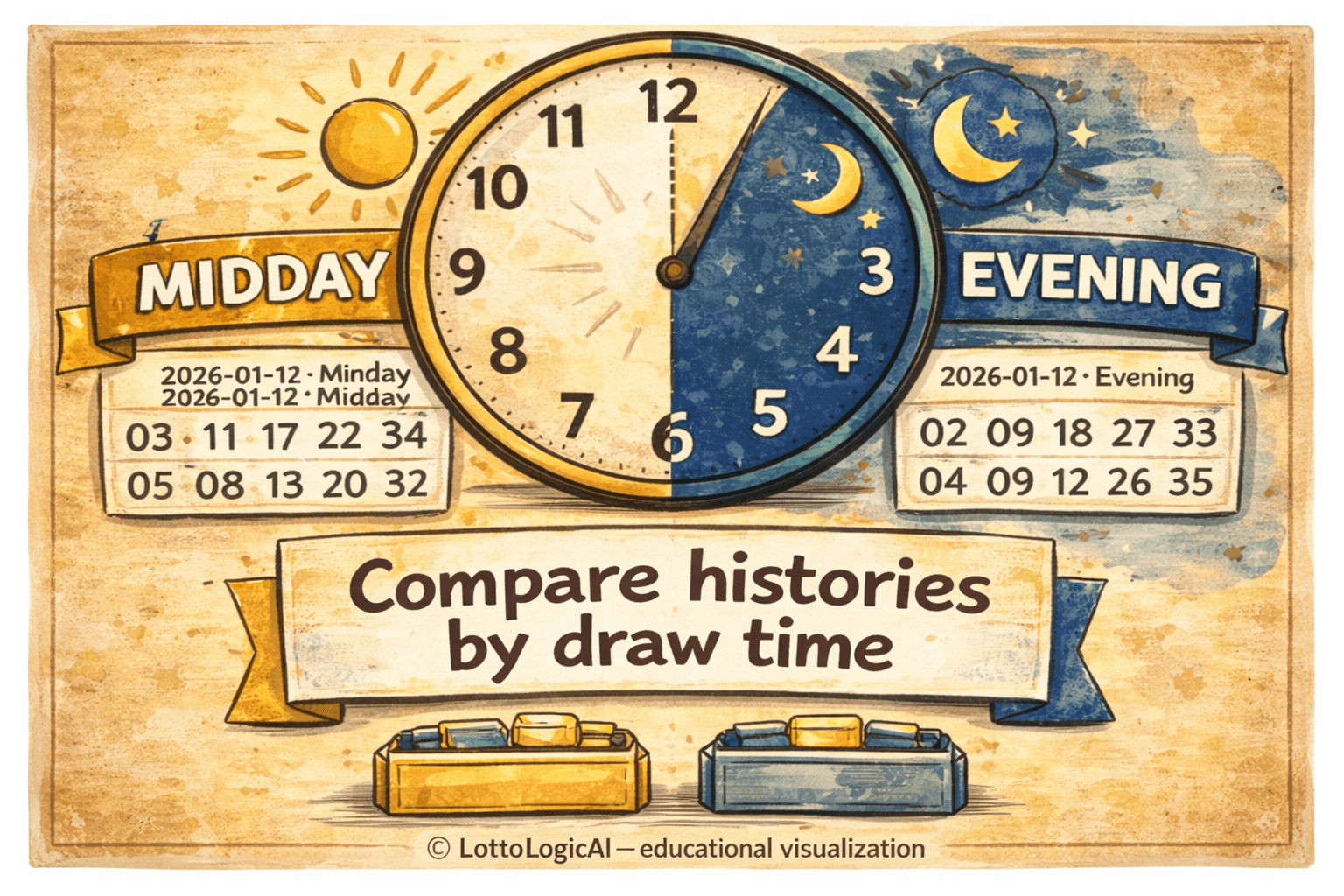
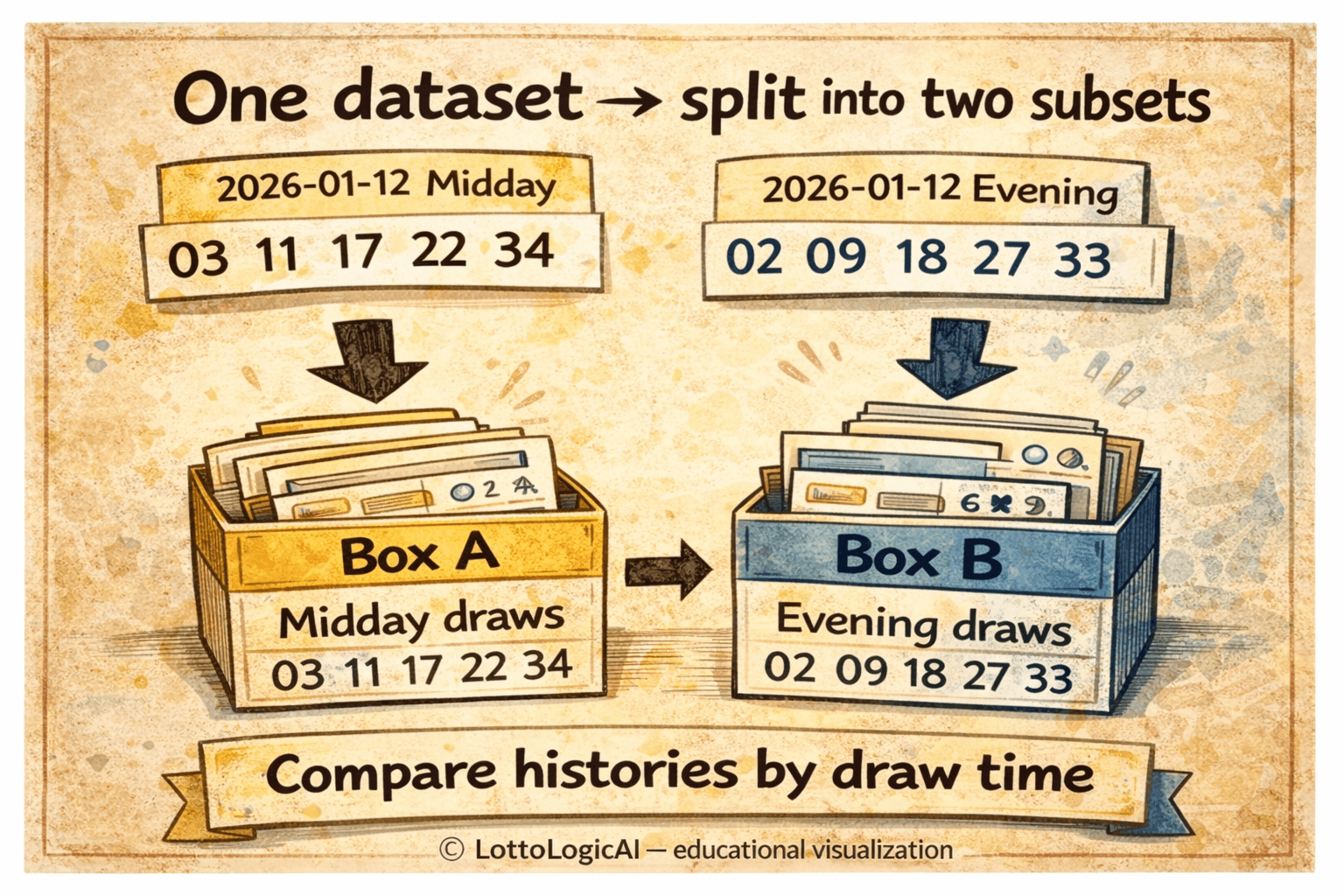
Time split means dividing one historical dataset into separate groups based on draw time. For example, midday and evening draws become two independent historical subsets inside the same overall game history.
The rules of the lottery remain the same for both draw times. Only the historical samples being compared are different. Any difference you see between midday and evening history is a property of those samples — not a property of the draw time itself.
Comparing distributions across time splits
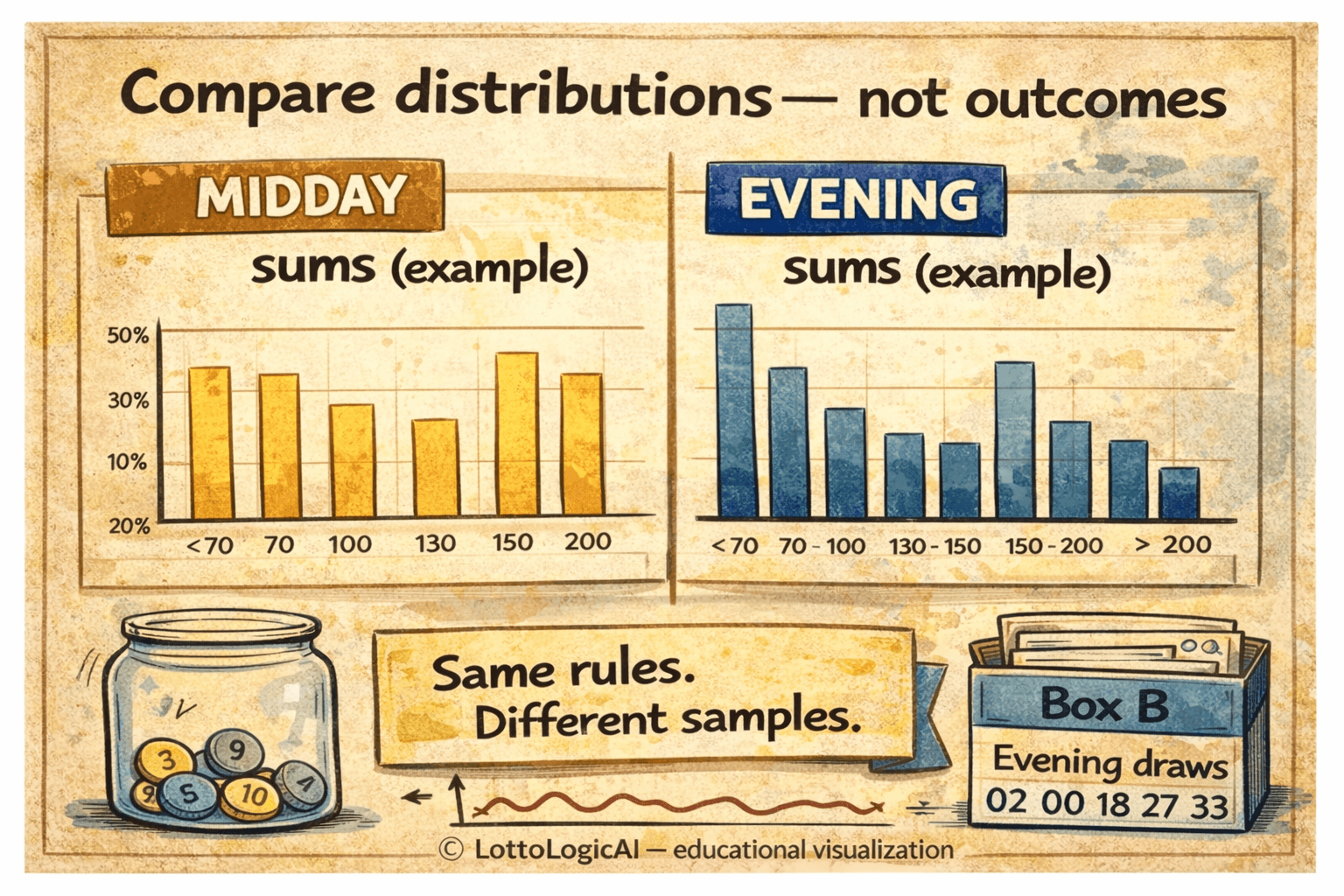
Time split is useful for comparing historical distributions such as sums, odd/even balance, or number frequencies across draw-time subsets. These comparisons can surface interesting patterns in the data.
Differences can appear between subsets. But they only reflect past samples and how those samples were partitioned. They do not imply future behavior or a built-in advantage for one draw time over another.
Why sample size matters
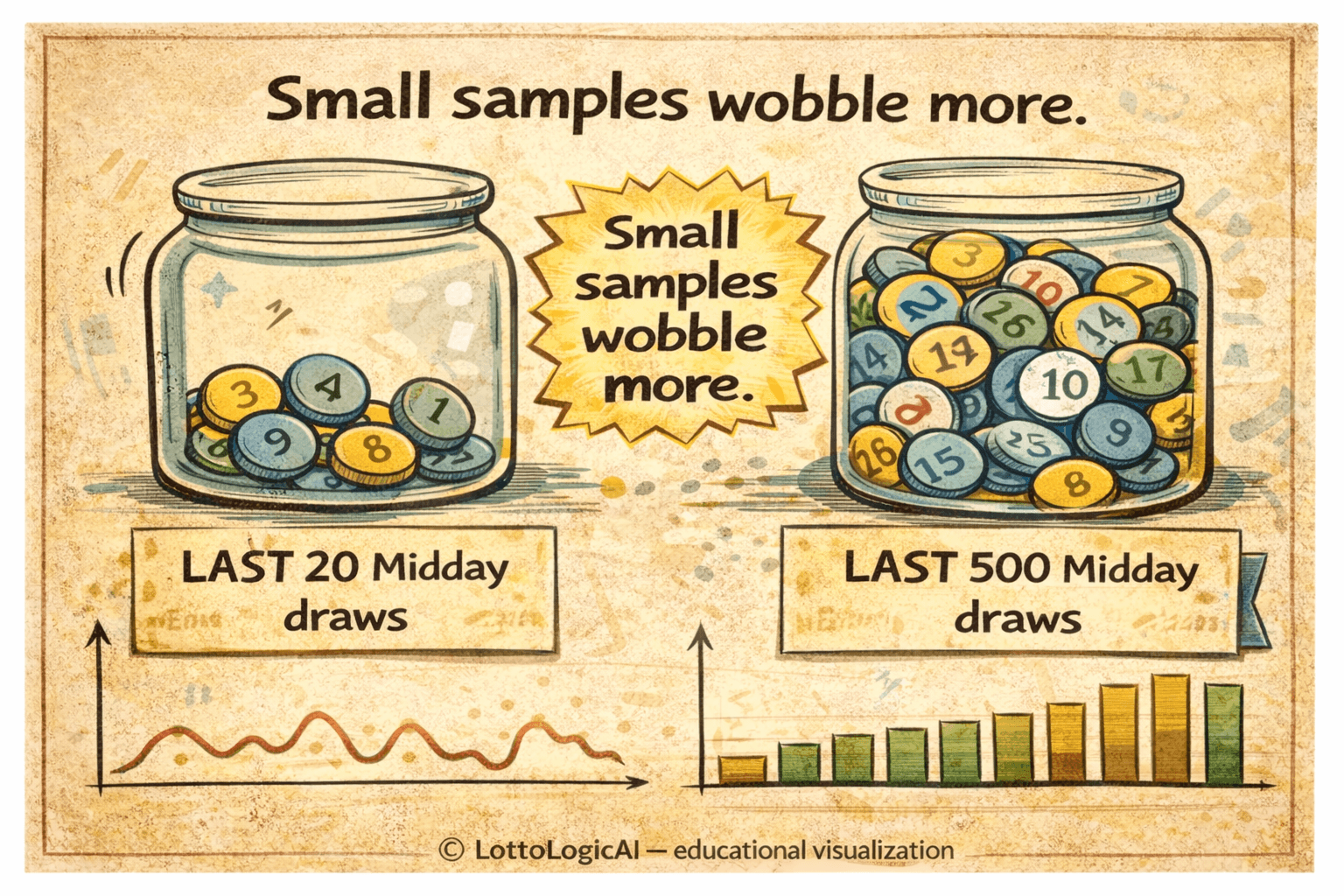
Smaller subsets — such as the last 20 draws at one time slot — show more random swings. Larger samples smooth out more of that noise and usually appear more stable. This is a statistical effect of sample size, not a hidden pattern in the lottery.
The same principle applies to hot and cold labels and run analysis: short windows can look dramatic, but they often just reflect ordinary variation in a small sample.
Common myths about lottery time split
Time split analysis is frequently misread. The most common errors involve treating historical differences between draw-time subsets as meaningful signals about future draws.
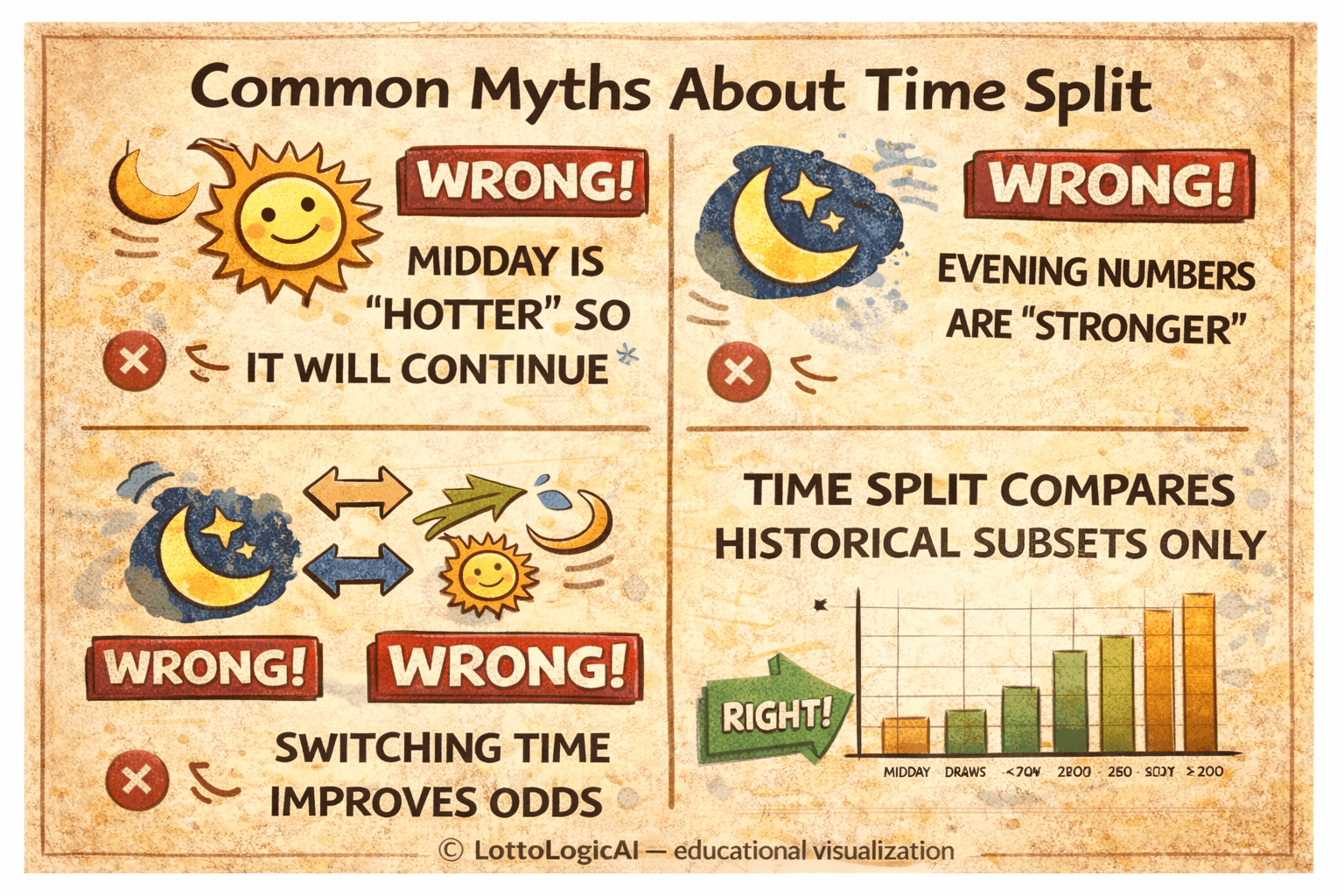
- Myth: Midday draws are hotter than evening draws.Reality: Both use the same random process. Any historical difference is a sample effect.
- Myth: Evening numbers are stronger or more predictable.Reality: Draw time does not affect randomness. The subsets just have different sample histories.
- Myth: Switching draw times improves odds.Reality: Time split only compares historical subsets. It does not change the odds of any draw.
How to read time split correctly
- Use time split to compare historical subsets inside the same game.
- Expect small samples to look more volatile than large samples.
- Compare distributions, not “strength” or “better” draw times.
- Avoid turning historical differences into predictive claims.
Time split works best as one descriptive lens alongside other historical views such as frequency, sum, and parity.
Where to see this in LottoLogicAI
Time-split thinking connects naturally to LottoLogicAI's public stats and Learn surfaces. These pages help compare historical subsets without turning those differences into forecasts.
Use a public stats page built from real historical draw data.
Open analyzer →Compare another historical stats page using a Pick-5 style game.
Open analyzer →Frequently asked questions about lottery time split
What is lottery time split?
Lottery time split means dividing one game's historical data into separate subsets based on draw time, such as midday versus evening.
Does one lottery draw time perform better than another?
No. Time split analysis compares historical subsets only. It does not mean one draw time is better or stronger than another.
Why do midday and evening results look different sometimes?
Historical subsets can look different because their samples are different, especially when one subset is smaller or more volatile. This is a statistical effect of sample size, not a meaningful signal.
Does time split analysis predict future lottery results?
No. Time split analysis is descriptive only. It summarizes historical partitions and does not predict future outcomes.
Is there a difference between midday and evening lottery numbers?
In a fair lottery, midday and evening draws use the same random process. Historical differences between the two subsets reflect sample variation only — not a systematic difference in outcomes.
- Lottery FrequencyCompare time-based subsets with full historical appearance counts.
- Lottery SumSee how total draw values can be compared across time splits.
- Lottery ParityUnderstand how odd/even composition can vary across subsets.
- Hot and Cold NumbersSee how windowed frequency labels behave within time-split subsets.
- Lottery Stats HubBrowse public historical stats pages across supported games.
- Florida Fantasy 5 StatsExplore a public game page with real historical draw data.
- California Fantasy 5 StatsCompare another Pick-5 style public historical stats page.
- Powerball StatisticsExplore a major multi-pool game page built from historical data.
Continue with Public Stats or Create an Account
Browse public lottery stats pages or create an account to explore more historical analysis tools inside LottoLogicAI.